


Blog
How to Control Household Pests Safely

How to Control Household Pests Safely
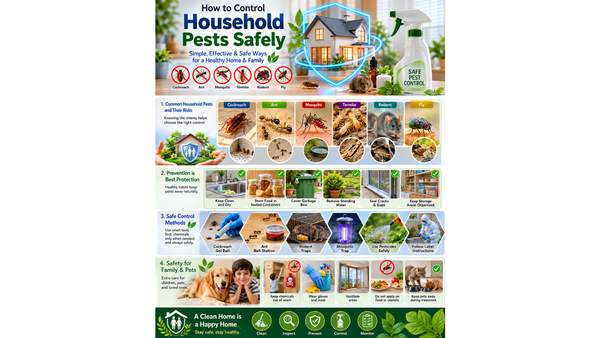
Household pests are more than just an irritation. Cockroaches, ants, mosquitoes, termites, flies, bed bugs and rodents can damage property, contaminate food and create an unhealthy living environment. Many people immediately think of spraying strong chemicals everywhere, but safe pest control is not only about killing pests. It is about controlling them in a way that protects your family, pets, food, furniture and indoor air.
The best approach is safe, smart and targeted pest management. This means preventing pests first, identifying the pest correctly, removing their food and hiding places, using traps or baits where possible and applying pesticides only when needed and only according to label instructions.
Safe pest control gives better long-term results than random spraying.
Why Household Pest Control Matters
Pests enter homes looking for food, water and shelter. Once they find these things, they can multiply quickly. A small pest problem can become a serious infestation if ignored.
Common household pests include:
- Cockroaches
- Ants
- Mosquitoes
- Flies
- Termites
- Bed bugs
- Rats and mice
- Stored food insects
- Spiders
Different pests need different control methods. For example, cockroaches hide in dark kitchen corners, mosquitoes breed in standing water, termites damage wood and rodents enter through small gaps. That is why correct identification is the first step.
Step 1: Identify the Pest Correctly
Before using any pest control product, identify the pest. Wrong identification leads to wrong treatment, wasted money and poor results.
Check:
- Where the pest is seen
- Whether it appears during day or night
- What damage it is causing
- Whether there are droppings, wings, mud tubes, bite marks or nests
- Whether the problem is in the kitchen, bathroom, bedroom, store room or garden
If you are unsure, take a clear photo or call a professional pest control expert. 
Step 2: Keep the Home Clean and Dry
Cleanliness is the foundation of household pest control. Pests need food, water and hiding places. If you remove these, pests become easier to control.
Important Cleaning Practices
 Clean food crumbs immediately.
- Keep kitchen counters and floors clean.
- Wash dishes before sleeping.
- Store food in sealed containers.
- Keep garbage bins covered.
- Empty trash regularly.
- Clean under stoves, refrigerators and cupboards.
- Fix water leakage in kitchens and bathrooms.
- Avoid standing water in pots, drains and trays.
Cockroaches, ants and rodents are strongly attracted to food waste. Mosquitoes breed in standing water. Termites prefer moisture and wood contact. A clean and dry home reduces pest pressure naturally.
Step 3: Seal Entry Points
Many pests enter through small cracks, holes and gaps. Rodents can squeeze through surprisingly small openings, while ants and cockroaches can enter through wall cracks, pipe gaps and door spaces.
Seal These Areas
- Cracks in walls
- Gaps under doors
- Spaces around pipes
- Broken window screens
- Drain openings
- Holes near kitchen cabinets
- Gaps around electrical fittings
- Roof or ceiling openings
Use door sweeps, silicone sealant, wire mesh, cement or suitable repair material. Sealing entry points is one of the safest and most effective pest prevention methods.
Step 4: Use Traps and Baits Before Spraying
For many household pests, traps and baits are safer and more targeted than open spraying. Bait stations can control cockroaches, ants and rodents while reducing chemical exposure when placed correctly.
Examples
- Cockroach gel baits
- Ant bait stations
- Sticky traps for monitoring
- Rodent snap traps or enclosed bait stations
- Mosquito traps
- Fly traps
Baits should be placed where pests travel, but away from children, pets and food preparation areas. Never place baits where they can contaminate food, utensils or drinking water.
Step 5: Use Pesticides Safely and Only When Needed
Pesticides can be useful, but they must be used carefully. More pesticide does not mean better control. Overuse can create health risks, bad smell, indoor air problems and pest resistance.
Safe Pesticide Use Tips
- Always read the label before use.
- Use only products approved for indoor use.
- Follow the recommended dose exactly.
- Do not mix different pesticides unless the label allows it.
- Keep children and pets away during application.
- Avoid spraying on food, utensils, bedding or toys.
- Ventilate the room after treatment if the label recommends it.
- Wear gloves, mask or protective clothing if required.
- Wash hands after handling any pest control product.
- Store pesticides in original containers only.
- Keep pesticides locked away from children and animals.
Never use outdoor agricultural pesticides inside the home. Household pest products and agricultural pesticides are not the same. Products designed for fields can be dangerous indoors.
Step 6: Control Cockroaches Safely
Cockroaches are common in kitchens, bathrooms, drains and dark corners. They hide during the day and come out at night.
Safe Cockroach Control
- Keep kitchen dry and clean.
- Remove grease from stove and walls.
- Seal cracks and cabinet gaps.
- Use cockroach gel bait in hidden corners.
- Use sticky traps to monitor activity.
- Avoid random spraying over the whole kitchen.
- Do not spray directly on utensils or food areas.
Cockroach control works best when cleaning and baiting are done together.
Step 7: Control Ants Safely
Ants usually enter homes in search of food and sugar. Spraying visible ants may kill some, but it often does not remove the colony.
Safe Ant Control
- Clean sugar, food spills and crumbs.
- Store sweets and food in sealed containers.
- Follow ant trails to find entry points.
- Seal cracks and gaps.
- Use ant baits near trails but away from children and pets.
- Avoid placing bait on kitchen surfaces where food is prepared.
Baits work slowly, but they are often more effective because worker ants carry bait back to the colony.
Step 8: Control Mosquitoes Safely
Mosquitoes are controlled best by removing breeding sites. Spraying alone is not enough if standing water remains.
Safe Mosquito Control
- Remove standing water from pots, buckets and trays.
- Clean drains and water channels.
- Cover water storage containers.
- Use window screens and mosquito nets.
- Keep grass and bushes trimmed.
- Use repellents according to label directions.
- Use larval control products only where suitable and recommended.
Mosquito control should focus on prevention, especially after rain or irrigation.
Step 9: Control Rodents Safely
Rats and mice can damage food, wiring, insulation and household items. They can also contaminate food areas.
Safe Rodent Control
- Store grains and food in sealed containers.
- Keep garbage covered.
- Remove clutter and hiding places.
- Seal holes and gaps.
- Use mechanical traps in safe locations.
- Use rodent bait stations carefully.
- Keep rodent poison away from children, pets and livestock.
- Dispose of dead rodents safely using gloves.
Rodent control requires both trapping and exclusion. If holes remain open, rodents will continue entering.
Step 10: Protect Children and Pets
Children and pets are more likely to touch treated surfaces, pick up bait or inhale pesticide vapors near the floor. Pest control must be planned with extra care in homes with children, elderly people, patients or pets.
Safety Rules
- Keep children and pets away from treated areas.
- Do not apply pesticides on toys, bedding or pet bowls.
- Use tamper-resistant bait stations where possible.
- Keep all products locked and labeled.
- Never transfer pesticide into drink bottles or food containers.
- Allow treated areas to dry fully before re-entry.
- Follow label instructions for waiting time and ventilation.
If accidental exposure happens, contact a medical professional or poison information center immediately and keep the product label available.
Step 11: When to Call a Professional
Some pest problems should not be handled casually. Professional help is recommended when:
- Termites are damaging wood or structure.
- Bed bugs spread to multiple rooms.
- Rodents are inside ceilings or walls.
- Cockroach infestation is heavy.
- You are unsure which product to use.
- There are children, pets or sensitive patients at home.
- Previous treatments failed.
A trained pest control professional can inspect the home, identify pest sources and apply the correct method safely.
Common Mistakes to Avoid
Avoid these unsafe pest control habits:
- Spraying pesticide over the whole room without need
- Using agricultural pesticides indoors
- Mixing different pesticides
- Using more than the recommended dose
- Applying pesticide near food or utensils
- Leaving baits where children or pets can reach
- Ignoring cleaning and sealing
- Using expired or unlabeled products
- Not reading label instructions
- Treating symptoms but not removing the source
Safe pest control is not about using the strongest product. It is about using the right method correctly.
Best Safe Pest Control Strategy
The safest and most effective strategy is called Integrated Pest Management, or IPM. It combines prevention, inspection, cleaning, sealing, trapping and careful pesticide use.
Simple IPM Plan for Homes
- Identify the pest.
- Find where it enters or hides.
- Remove food, water and shelter.
- Seal cracks and entry points.
- Use traps or baits first.
- Use pesticides only when necessary.
- Follow label instructions carefully.
- Monitor the result and repeat prevention steps.
This method gives long-term control while reducing unnecessary chemical exposure.
Conclusion
Household pests can be controlled safely when you use a smart and balanced approach. Start with cleanliness, remove standing water, seal entry points and store food properly. Use traps and baits before spraying. If pesticides are needed, use only indoor-approved products and follow the label carefully.
Safe pest control protects your home, your family and your health. The goal is not just to kill pests today, but to prevent them from coming back tomorrow.
For best results, choose quality pest control products and consult professionals when the infestation is serious.
FAQ
1. What is the safest way to control household pests?
The safest way is to use prevention first. Keep the home clean, remove food and water sources, seal entry points and use traps or baits before applying pesticides.
2. Can I use agricultural pesticides inside the home?
No. Agricultural pesticides should not be used indoors unless the label specifically allows indoor household use. Outdoor or field products can be dangerous inside homes.
3. Are cockroach baits safer than sprays?
Cockroach baits are often more targeted than room spraying when placed correctly. They should still be kept away from children, pets and food areas.
4. How can I prevent mosquitoes at home?
Remove standing water, cover water containers, clean drains, use window screens and maintain good hygiene around the house.
5. When should I call a pest control professional?
Call a professional for termites, bed bugs, heavy cockroach infestation, rodent problems inside walls or ceilings, or when you are unsure about safe product use.
