
How to Choose the Right Fertilizer for Better Yield
Introduction Choosing the right fertilizer is one of the most [...]
Introduction
Choosing the right fertilizer is one of the most important decisions for achieving better crop yield, healthy plant growth, and improved farm profitability. Many farmers apply fertilizer based on habit, market availability, or advice from others, but every field has different soil conditions, crop requirements, and nutrient deficiencies.
The right fertilizer at the right time, in the right quantity, and through the right method can significantly improve crop growth, grain quality, root development, flowering, fruiting, and final yield. On the other hand, wrong fertilizer selection can waste money, reduce crop performance, and damage soil health.
In this blog post, we will discuss how farmers can choose the best fertilizer for their crops and get better yield from every acre.
1. Start with Soil Testing
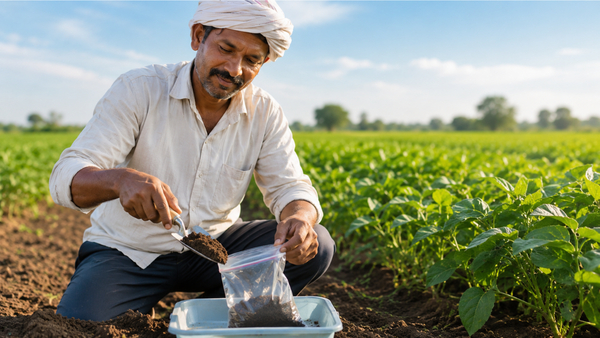
Before selecting any fertilizer, the first and most important step is soil testing. Soil testing helps farmers understand which nutrients are already available in the soil and which nutrients are deficient.
A soil test can show the level of:
- Nitrogen
- Phosphorus
- Potassium
- Zinc
- Boron
- Organic matter
- Soil pH
- Salinity
Without soil testing, fertilizer use is mostly guesswork. For example, if your soil already has enough phosphorus, applying more DAP may not give extra benefit. Similarly, if zinc is deficient, the crop may remain weak even after applying urea or DAP.
Tip for farmers:
Test your soil at least once every 2 to 3 years, especially before major crops like wheat, rice, maize, sugarcane, cotton, and vegetables.
2. Understand the Role of NPK Fertilizers
Suggested Image:
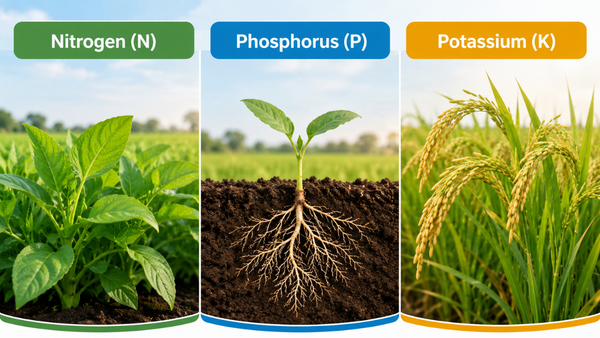
An educational graphic showing NPK: Nitrogen for leaves, Phosphorus for roots, Potassium for strength.
Alt Text: NPK fertilizer benefits for crop growth.
Most fertilizers contain three major nutrients: Nitrogen, Phosphorus, and Potassium. These are commonly known as NPK.
Nitrogen — For Green Growth
Nitrogen supports leaf growth, plant height, tillering, and overall vegetative development. Fertilizers like urea are commonly used to provide nitrogen.
Nitrogen is especially important during early crop growth, but excessive use can make plants soft, increase pest attack, and cause lodging.
Phosphorus — For Root Development
Phosphorus helps in strong root growth, early crop establishment, flowering, and seed formation. DAP and other phosphatic fertilizers are commonly used for phosphorus.
Phosphorus should usually be applied at sowing or early crop stages because it helps the crop develop a strong root system.
Potassium — For Strength and Quality
Potassium improves crop resistance against stress, disease, drought, and lodging. It also improves grain filling, fruit quality, and overall crop strength.
Potassium is very important for crops like sugarcane, vegetables, fruits, cotton, and maize.
3. Match Fertilizer with Crop Requirement
Different crops need different nutrients. A fertilizer that works well for wheat may not be the best choice for rice, vegetables, or sugarcane.
For Wheat
Wheat needs balanced nitrogen and phosphorus for good tillering, root growth, and grain formation. Zinc may also be important in deficient soils.
For Rice
Rice requires nitrogen in split doses and zinc is often very important in rice-growing areas. Balanced fertilizer helps improve tillering and grain filling.
For Maize
Maize is a heavy feeder and requires proper nitrogen, phosphorus, potassium, and micronutrients for strong stem development and better grain size.
For Vegetables
Vegetables need balanced nutrition throughout their growth cycle. Nitrogen helps vegetative growth, phosphorus helps roots, and potassium improves fruit size, quality, and shelf life.
For Sugarcane
Sugarcane requires high nutrition, especially nitrogen and potassium. Potassium helps improve cane strength, sugar recovery, and crop quality.
Farmer’s advice:
Always select fertilizer according to crop type, crop stage, and soil condition.

4. Do Not Ignore Micronutrients
Suggested Image:
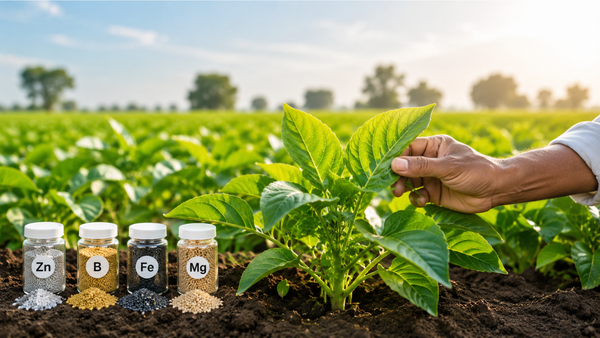
Close-up of healthy green crop leaves with micronutrient fertilizer packs or granules.
Alt Text: Micronutrients like zinc and boron improve crop health.
Many farmers focus only on urea and DAP, but micronutrients are also very important for better yield. Even a small deficiency of micronutrients can reduce crop performance.
Important micronutrients include:
- Zinc
- Boron
- Iron
- Manganese
- Copper
- Magnesium
Zinc
Zinc is important for plant growth, leaf development, enzyme activity, and better crop establishment. Zinc deficiency is common in many rice, wheat, and maize fields.
Boron
Boron helps in flowering, pollination, fruit setting, grain formation, and overall reproductive growth. It is especially important for oilseed crops, vegetables, cotton, and fruits.
Magnesium
Magnesium is part of chlorophyll and helps plants maintain green leaves and proper photosynthesis.
Important point:
Micronutrients should be used according to deficiency symptoms, soil test results, or expert recommendation.
5. Choose Fertilizer According to Crop Stage
Suggested Image:
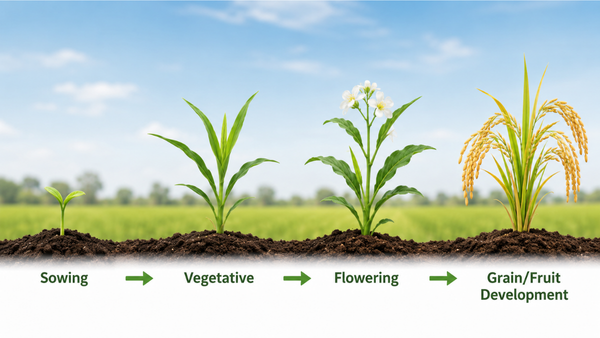
A crop growth stage chart showing sowing, vegetative growth, flowering, and grain filling.
Alt Text: Fertilizer selection according to crop growth stage.
Crop nutrition requirements change at different stages. Applying the right fertilizer at the right stage gives better results.
At Sowing Stage
Use fertilizers that support root development and early plant establishment. Phosphorus-based fertilizers are usually important at this stage.
Vegetative Stage
Nitrogen is important during vegetative growth because it supports leaf development, plant height, and tillering.
Flowering Stage
Balanced nutrition is important during flowering. Boron, potassium, and other micronutrients can support better flowering and fruit setting.
Grain or Fruit Development Stage
Potassium plays an important role in grain filling, fruit size, sugar formation, and quality improvement.
6. Use Split Application for Better Efficiency
Applying all fertilizer at one time is not always effective. Some nutrients, especially nitrogen, can be lost through leaching, volatilization, or runoff.
Split application means applying fertilizer in different doses at different crop stages.
For example:
- First dose at sowing
- Second dose at early growth
- Third dose at tillering, flowering, or grain formation stage
This method improves nutrient availability and reduces fertilizer wastage.
Practical tip:
For nitrogen fertilizers like urea, split application is usually better than applying the full quantity at once.
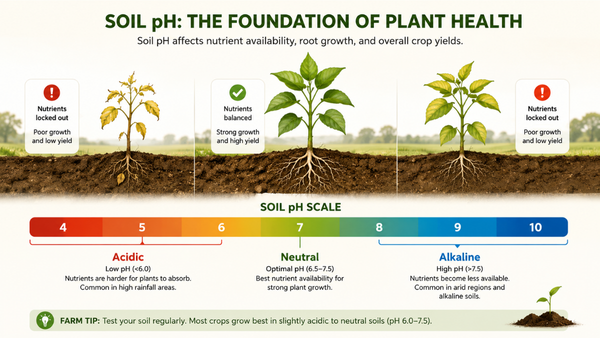
7. Consider Soil pH and Salinity
Suggested Image:
A simple soil pH scale graphic with acidic, neutral, and alkaline zones.
Alt Text: Soil pH affects fertilizer availability.
Soil pH affects nutrient availability. In high pH or alkaline soils, some nutrients like phosphorus, zinc, and iron may become less available to plants.
Saline soils can also reduce nutrient uptake and affect crop growth. In such soils, balanced fertilization, organic matter, gypsum where needed, and proper irrigation management can help improve crop performance.
If your crop is showing yellowing, poor growth, or weak roots even after fertilizer application, soil pH or salinity may be one of the reasons.
8. Use Organic Matter Along with Fertilizers
Chemical fertilizers provide essential nutrients, but organic matter improves soil health. Farmyard manure, compost, green manure, and crop residues help improve soil structure, water holding capacity, microbial activity, and nutrient availability.
Organic matter also helps fertilizers work more effectively.
Benefits of organic matter include:
- Better soil structure
- Improved moisture retention
- Increased microbial activity
- Better nutrient availability
- Improved root growth
For long-term soil fertility, farmers should combine balanced fertilizer use with organic matter management.
9. Avoid Overuse of Fertilizers
More fertilizer does not always mean more yield. Excessive fertilizer use can create many problems, such as:
- Higher input cost
- Crop lodging
- Pest and disease attack
- Poor grain or fruit quality
- Soil imbalance
- Nutrient wastage
- Environmental damage
Balanced fertilizer use is more profitable than excessive fertilizer use. The goal should be maximum efficiency, not maximum quantity.
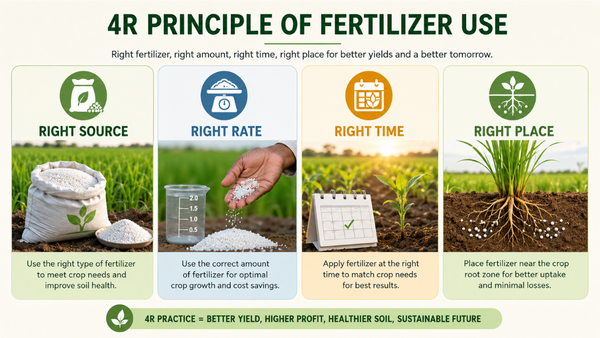
10. Follow the 4R Fertilizer Principle
Suggested Image:
Infographic showing the 4R principle: Right Source, Right Rate, Right Time, Right Place.
Alt Text: 4R fertilizer principle for better crop yield.
A simple and effective rule for fertilizer use is the 4R principle.
Right Source
Choose the correct fertilizer according to crop and soil need.
Right Rate
Apply the correct quantity based on soil test and crop requirement.
Right Time
Apply fertilizer when the crop needs it most.
Right Place
Place fertilizer where roots can easily absorb it.
Following the 4R principle helps farmers get better yield, reduce losses, and improve fertilizer efficiency.
11. Consult an Agriculture Expert
Every field is different. Soil type, water quality, crop history, climate, and fertilizer availability can all affect fertilizer decisions.
Before applying expensive fertilizers or micronutrients, it is better to consult an agriculture expert, fertilizer dealer, or soil testing laboratory. Expert advice can help farmers avoid mistakes and select the most suitable fertilizer plan.
Conclusion
Choosing the right fertilizer is not only about buying urea, DAP, or any popular product from the market. It is about understanding your soil, crop requirement, growth stage, nutrient deficiency, and application timing.
For better yield, farmers should focus on:
- Soil testing
- Balanced NPK use
- Micronutrient management
- Proper fertilizer timing
- Split application
- Organic matter improvement
- Expert consultation
A balanced fertilizer plan can improve crop health, reduce input wastage, and increase farm profit. The right fertilizer decision today can lead to a stronger crop and better harvest tomorrow.

Share This Article
Latest Articles
June 20, 2026
